

A Practical Huddle Guide for Safer Australian Hospitals
Huddles are brief, structured team conversations used to surface risks, coordinate actions and escalate concerns before patients are harmed. This guide focuses on using the huddle process to reduce adverse events by turning scattered clinical information into a shared plan with named owners. The central discipline is consistency: the same expectations, cues and follow-up should apply on weekdays, weekends and across shifts.
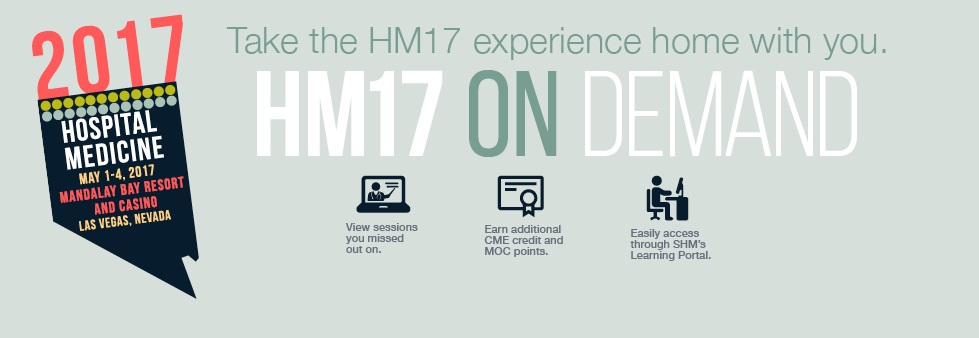
Hospital Medicine 2017, held from 1 to 4 May at Mandalay Bay Resort and Casino in Las Vegas, brought hospitalists and other healthcare professionals together around research, best practice, innovation and patient care. Its continuing medical education program offered a useful reminder that safer care depends less on a single brilliant intervention than on reliable routines that teams can repeat under pressure.
An Australian implementation should preserve that discipline while fitting local systems. Public hospital services in New South Wales, Victoria, Queensland and other jurisdictions manage complex rosters, credentialing, escalation pathways and patient flow differently. A huddle that ignores those operational realities may look impressive but fail quickly, whereas a modest format that fits the existing ward can become part of ordinary work.
Success should be measured through safer decisions and completed actions, not the number of meetings recorded. The process must also support junior clinicians and Aboriginal and Torres Strait Islander patients by enabling respectful, culturally safe escalation without stereotyping. Clear roles, closed-loop communication and feedback from frontline staff are essential if the huddle is to earn trust.
Why Huddles Work in Australian Hospitals
A huddle works because it creates a shared operational picture at the point where work is about to happen. Nurses, medical staff, pharmacists and allied health professionals may each hold a fragment of risk information; a short exchange can connect those fragments before medication errors, falls, delayed transfers or avoidable deterioration occur. It is not a bedside round, and it should not become a prolonged case conference.
Clinical language should be familiar and direct. ISBAR, for example, fits many Australian hospital settings: Identify, Situation, Background, Assessment and Recommendation. A charge nurse might say, “This patient is unsafe for discharge,” while the registrar identifies the outstanding issue and consultant asks what support is needed. Practical phrases such as “I’ll chase it” and “needs escalation” make ownership visible without the aggressive tone sometimes associated with high-pressure handover.
Australian hospitals operate as a mixed public-private market. State and territory health services manage public hospitals, with Commonwealth grants and Medicare supporting much of their activity, while private hospitals and insurers form a substantial parallel sector. Hospital medicine is also less uniform than in some overseas systems, with inpatient care often shared among admitting teams, consultants, registrars and junior doctors rather than a dedicated hospitalist service. A common huddle can create continuity across that distributed model. The wider HM17 conference program placed implementation knowledge alongside clinical education and professional exchange.
Build the Huddle Around Real Work
Begin with one clinical area and one recurring purpose rather than trying to coordinate the entire hospital. A medical or surgical ward might focus on deterioration, medication discrepancies, falls and discharge barriers; an emergency department might concentrate on patient flow, equipment and safe transfers. The scope should be narrow enough to finish on time, but real enough that the team can act on what it hears.
Core participation should include the people who can change the plan: the shift coordinator, charge nurse, medical representative, pharmacist when available, and relevant allied health or patient-flow staff. Remote or smaller teams can join by phone or secure video, which is especially relevant to regional services around places such as Broken Hill, Alice Springs or Mount Gambier. Attendance should reflect decision-making authority, not rank alone.
Use a one-page visual template that includes high-risk patients, pending tests, medication changes, equipment, staffing, anticipated discharges and unresolved actions. Limit each discussion to essential facts, then use ISBAR to frame a concern and a clear recommendation. The output for every item should be an action, an owner and a due time; “watch this patient” is not a completed plan.
Run a Short, Repeatable Huddle
Before each huddle, the facilitator gathers updates from defined sources rather than relying on whoever remembers to speak. Previous actions should be checked first, followed by new clinical risks and capacity issues. A visible clock, a consistent location and a start time protect the huddle from becoming optional. Even a five-minute meeting works better when everyone knows when it begins and what information it requires.
During the meeting, use a predictable sequence: safety concerns, patients at risk, flow constraints, assignments and confirmation. Invite the person with relevant information to speak, then let the senior clinician resolve uncertainty. Use closed-loop communication by restating an assignment and confirming that it was accepted. Escalate immediately when information is missing, a patient is deteriorating or the team lacks capacity to provide safe care.
After the huddle, publish the action log where the whole team can access it and update it during the shift. Record barriers as well as tasks, because a missed action may reflect a full roster, unavailable pharmacy support or a transport delay rather than individual indifference. Feed material issues back to operational leaders; otherwise the huddle becomes a place where frontline staff repeatedly report problems that no one owns.
Measure Whether the Huddle Changes Care
A practical comparison shows where huddle-based coordination differs from routine ward communication:
| Dimension | Routine communication without a huddle | Huddle-enabled workflow |
|---|---|---|
| Purpose | Information shared through intermittent handover | Specific risks surfaced before care proceeds |
| Timing | Often triggered by an event or shift change | Short and predictable at agreed intervals |
| Participants | Whoever happens to be available | People with information and authority to act |
| Output | Assumptions or verbal intentions | Named action, owner and due time |
| Follow-up | Difficult to determine whether concerns were resolved | Shared log, escalation and closed-loop confirmation |
Balance process measures with clinical outcomes. Useful process indicators include huddle frequency, median duration, attendance by role, actions closed by the due time and repeat escalation of the same issue. Outcome measures might include medication incidents, falls with injury, pressure injuries, unplanned transfers, delayed discharge and response to sepsis. Use existing incident and audit systems rather than creating a separate reporting burden.
Trend the results over several months and review them with the ward team. An adverse event count alone is unsuitable for judging a short pilot because rare events and reporting culture create substantial noise. Near misses and staff feedback often reveal improvement sooner, while balancing measures—such as time spent in meetings or work delayed outside the huddle—show whether the intervention is efficient.
Equip People for Reliable Teams
A huddle is a technical communication process, but it also tests psychological safety. Staff must be able to say that a patient is unsafe, that a task cannot safely be delegated or that they need help without fearing humiliation. Leaders should respond to disclosure with curiosity and system questions, not blame. Repeated interruptions, dismissive replies or unexplained changes to the format will quickly teach people that speaking carries a cost.
Training should be short, practical and repeated. Use simulations built around local equipment, escalation numbers and realistic cases; include how a medical registrar raises concern with a consultant and how a nurse closes a loop with pharmacy. Teach facilitators to distinguish a safety huddle from a performance review. Observations should improve the format, while individual performance issues follow normal credentialing and human-resources processes.
Workforce planning also affects who can attend and lead. Australian clinicians may work across public, private, sessional and locum arrangements, so participation should be built into local roles rather than treated as an optional extra. Career discussions may influence shifts, protected time and willingness to take on safety roles, and hospitalist contract advice offers useful context from HM17. Night and weekend staff should have a voice equal to day teams.
Practical Recommendations for a Focused Pilot
Sustainability depends on governance that treats small operational signals as valuable evidence. A multidisciplinary steering group should review huddle data, remove recurring barriers and release the resources needed for safer staffing or equipment. Ward leaders should maintain the format locally, while executive sponsors protect participation time and ensure that escalated risks reach the people able to resolve them.
A focused first phase should use the following recommendations:
- Choose one ward with recurring risks and an operational sponsor, then establish a six- to eight-week pilot with baseline information.
- Name a facilitator and backup, reserve five to ten minutes at a fixed point and keep participation focused on staff who can act.
- Standardise a one-page format using ISBAR, recording an action, owner, due time and escalation route for every concern.
- Review completed actions weekly and share a short summary showing closure rates, recurring barriers and selected balancing measures.
- Expand only after frontline feedback and safety outcomes indicate that the format is useful, feasible and not shifting work elsewhere.
Make the next step specific: schedule the first five-minute huddle for the next shift change, appoint its facilitator, and record attendance, the three highest-priority risks and every assigned action in one shared log.
-
Re-energize and focus your practice with the latest research, best practices and newest innovations in the field that can immediately be applied to improving patient care.
-
Learn from the “best of the best,” including nationally renowned leaders in the field of hospital medicine.
-
Connect and collaborate with a vibrant community of hospital medicine professionals.